
Nearly half of American patients, 47% according to a mid-2026 survey reported by TechTarget, now use AI to find a healthcare provider online. That figure was 31% just nine months earlier. And contrary to the usual assumption that new technology skews young, patients aged 45 to 60 are using AI for provider search at more than double the rate of patients under 30.
For healthcare marketing leaders, that number should land as both an opportunity and a warning. It confirms that AI is no longer a channel you’re testing: it’s already inside the moment your patients decide who treats them. The warning is what comes next: once AI is that deeply embedded in a decision this personal, the cost of getting the human versus automated balance wrong isn’t a lower click-through rate. It’s trust, and trust in healthcare doesn’t rebuild at the same speed it erodes.
The wrong question
Most healthcare marketing teams are still asking, “should we adopt AI in our patient experience?” That question is already outdated. Patients answered it for you the moment nearly half of them started asking a chatbot, an AI search summary, or an AI-powered assistant to help them find care. The real question is more uncomfortable: where exactly does AI belong in a patient’s journey, and where does it start working against the very trust your brand depends on?
Where AI earns its place
AI is genuinely useful, often better than the alternative, in the retrieval and orchestration layer of the patient journey. Surfacing the right specialist based on symptoms and location. Finding an open appointment slot without three phone transfers. Summarizing a complex service line into a plain-language answer inside a search result. Done well, this isn’t automation replacing your brand. It’s automation removing the friction that used to make patients give up and go somewhere else.
Health systems building AI-first content management systems and orchestrated digital front doors are seeing this play out in faster time to appointment and lower abandonment. That’s a legitimate growth lever, not just an efficiency play.
Where it breaks
The line gets crossed the moment AI starts speaking for the organization on anything that touches a diagnosis, a treatment decision, or a patient’s fear. Fully AI-generated health content without a named clinician behind it. Chat experiences that simulate empathy without a real person able to step in. Journey “orchestration” so aggressive it feels like being processed rather than cared for. Patients are unusually good at detecting when something that should feel human doesn’t. In a category built entirely on trust, that detection is expensive.
A practical test
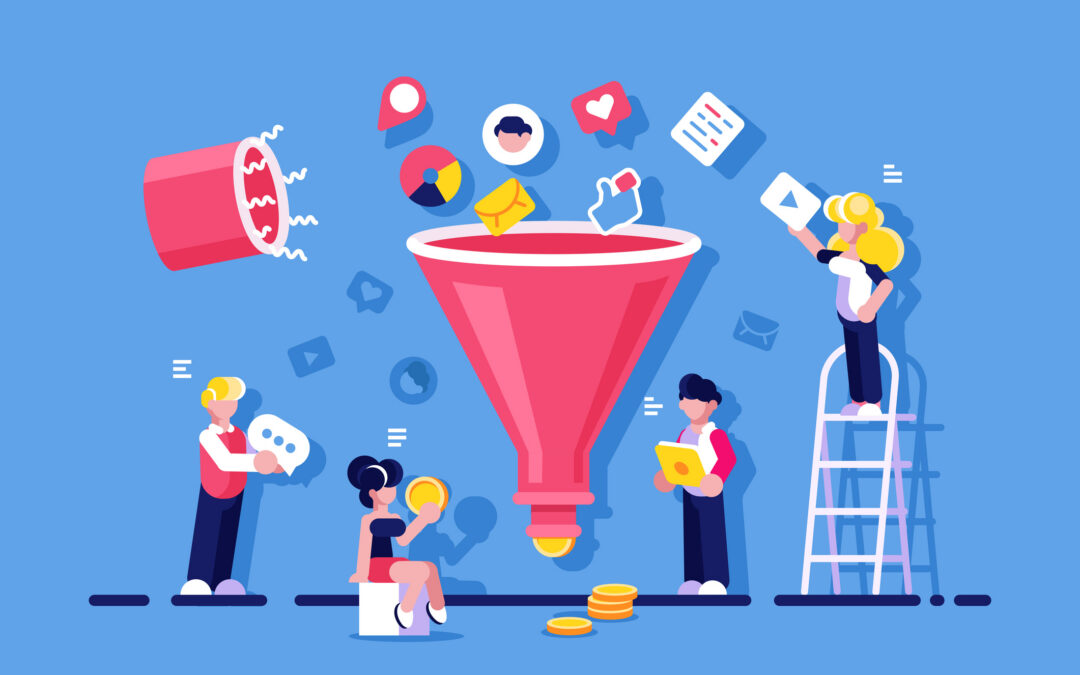
The healthcare marketers navigating this well aren’t relying on instinct. They’re applying a simple test to every AI-touched moment in their funnel: can you name the human who is accountable for what it says? If an AI summary answers a clinical question, is a real clinician credited and responsible for that content being accurate? If a chatbot handles scheduling, is there a visible, fast path to a human when the conversation gets serious? If the answer is no, that’s not a nuance to fix later. It’s the first thing to fix.
This isn’t a call to slow down AI adoption. Patients have already made that decision moot. It’s a call to be deliberate about which parts of the patient journey are infrastructure, where speed and automation are the whole point, and which parts are relationship, where a human still has to be visibly, credibly present.
The takeaway for the C-suite
Boards and CMOs are going to keep pushing AI adoption because the efficiency case is real and immediate. The organizations that come out ahead won’t be the ones that adopted AI fastest. They’ll be the ones that could always answer one question, for every AI-touched moment in their marketing and patient experience: who’s the human behind this, and would a patient trust what they’d find if they asked?
Sources: TechTarget/rater8 patient survey (June 2026); SHSMD Connections 2026 session programming on AI in healthcare marketing.